Blog

  • Get Cited on ChatGPT in 90 Days: AEO + KPIs for Marketers

    Get Cited on ChatGPT in 90 Days: AEO + KPIs for Marketers

    ChatGPT doesn’t hand out a #1 spot the way Google does. Visibility now depends on three levers working together: your site must be crawlable, your content has to answer the question in the first sentence, and other credible sources have to back you up. Start this week by confirming OAI-SearchBot can reach your site, rewriting one priority page to lead with a direct answer, and picking 10 to 20 prompts to track over time.


    TL;DR:

    • Ensuring ChatGPT can crawl your site requires checking robots.txt permissions for OAI-SearchBot and managing IP restrictions across multiple user agents.
    • Improving visibility depends on rewriting key pages to lead with a direct answer and earning third-party mentions on credible sources already ranking for your prompts.
    • Tracking progress through weekly logouts of 10 to 20 real buyer prompts helps measure mention rate and share of voice over time, with results visible in weeks to months.
    • Technical fixes like unblocking crawler access are quick, but citation-based improvements can take several weeks to months to impact ChatGPT mentions.
    • Using automated tools like CrowdReply simplifies continuous tracking, prompt research, and citation outreach, accelerating your AI search visibility efforts.

    Crowdreply
    Track Your AI Search Visibility
    CrowdReply monitors visibility, tracks citations, and helps brands engage in online conversations across ChatGPT, Perplexity, and Gemini.

    Table of Contents

    What Does “Rank in ChatGPT” Actually Mean?

    Google returns ten blue links ranked by position. ChatGPT synthesizes an answer from multiple sources and decides, on the fly, which ones to name and link. There’s no leaderboard to climb, which means the old mental model of “rank #1” doesn’t transfer, and chasing it wastes effort better spent elsewhere.

    What replaces it are four metrics you can actually track. Mention rate is the percentage of times your brand shows up across a fixed set of prompts run over time. Position within the answer captures whether you’re named first, buried in a list, or mentioned only as an aside, since earlier mentions tend to carry more weight with users who skim. Share of voice compares your mention frequency against named competitors on the same prompts. Cited URL tells you exactly which page ChatGPT pulled from, which is the closest thing to a ranking signal you’ll get.

    Here’s the tracking setup that works without buying software:

    1. Build a list of 10 to 20 prompts your buyers actually type, not generic keyword phrases.
    2. Run each prompt weekly in a logged-out session so personalization and memory don’t skew results.
    3. Log five columns: date, prompt, whether you were mentioned, competitor names in order of appearance, and the cited URL.
    4. Calculate mention rate (mentions divided by total prompts run) and share of voice (your mentions divided by total brand mentions across the set).
    5. Review trends monthly, not daily. A single week of data is noise, not signal.

    Logged-out sessions matter more than most marketers assume. ChatGPT’s answers shift based on session history and account context, so a logged-in test reflects your own browsing habits, not what a fresh prospect sees.

    Before worrying about phrasing or formatting, confirm ChatGPT can even see your pages. This is a binary gate: fail it, and no amount of clever copywriting matters. OpenAI has confirmed there’s no way to guarantee top placement in ChatGPT Search, but you can absolutely guarantee exclusion by blocking the wrong crawler.

    Three separate user agents matter here, and they’re often confused. OAI-SearchBot indexes content specifically for ChatGPT Search. GPTBot crawls content for model training. ChatGPT-User fetches pages in real time when a user asks a question that triggers browsing. Each has its own published IP ranges, so blocking one doesn’t necessarily block the others, and you need to manage them individually in robots.txt.

    Run through this checklist:

    • Confirm your robots.txt explicitly allows OAI-SearchBot; don’t assume a blanket “Allow: /” covers it if you’ve also got Disallow rules targeting bot categories.
    • Check your CDN or firewall (Cloudflare, Akamai, and similar services often ship with aggressive bot-blocking defaults) to make sure OpenAI’s published IP addresses aren’t caught in a blanket “block AI scrapers” rule.
    • Verify your core answer content renders in the initial HTML response, not injected client-side by JavaScript after the page loads.
    • Use semantic HTML (proper heading hierarchy, <article> tags, clear paragraph structure) so extraction tools can parse meaning, not just text.

    Passing a Google crawlability check does not mean you pass this one. Google’s indexer and OpenAI’s retrieval system are entirely separate pipelines, and a page can rank fine on Google while being invisible to ChatGPT Search if OAI-SearchBot is blocked or the content loads via JavaScript the crawler doesn’t execute.

    Pro Tip: After updating robots.txt, wait before panicking. OpenAI notes that changes can take roughly 24 hours to propagate through their systems, so test again the next day rather than assuming the fix failed.

    Writing Content That ChatGPT Can Actually Quote

    Getting crawled is step one. Getting quoted requires content shaped for extraction, not just readability. A model pulling together an answer favors passages that already look like an answer: short, self-contained, and stripped of throat-clearing.

    The pattern that works consistently: write an H2 as a real question, then answer it in one sentence directly underneath, before any supporting detail. “What Does ChatGPT Ranking Depend On?” followed immediately by a clean, factual sentence gives the model something it can lift whole. Bury that same fact three paragraphs into a narrative introduction, and it’s far less likely to surface.

    Structured data plays a supporting role here. Marking up pages with schema.org types like Article, FAQPage, or Product doesn’t guarantee inclusion, but it makes facts like prices, dates, and specifications machine-readable rather than something the model has to infer from prose.

    A few formatting habits worth adopting:

    • Lead every major section with the direct answer, then expand with evidence or nuance afterward.
    • Use FAQ schema on pages that already answer common questions in Q&A format.
    • Keep comparison tables factual and specific rather than vague marketing language dressed up as data.
    • Avoid stuffing a page with ten related questions when three answered well would extract more cleanly.

    Listicle and comparison formats get quoted disproportionately. Structured, answer-first passages increase extractability, and models tend to lift content that already resembles the shape of an answer rather than content buried in narrative. That doesn’t mean padding a page with a numbered list for its own sake. A comparison page built around genuine distinctions between options gets cited; one built to game the format with fluff typically doesn’t hold up when a model checks it against other sources.

    Earning the Third-Party Mentions That Tip the Model Toward You

    Your own site is only half the equation. A large share of what ChatGPT cites comes from external editorial and community pages rather than brand-owned domains, which means digital PR and community presence carry as much weight as on-site optimization, sometimes more.

    This tracks with how these models work. When corroborating a claim, a model that finds your brand mentioned across several independent, credible sources treats that as a stronger signal than a single self-published page making the same claim. Earning citations through targeted outreach to sites that already rank for your target prompts is often faster than waiting for your own domain authority to build.

    A campaign that actually moves the needle looks like this:

    1. Identify 2 to 3 existing listicles or comparison posts already ranking for prompts you care about.
    2. Pitch the editor with one extractable, factual bullet about your product, not a generic press release.
    3. Get the mention placed, ideally with a link back to a specific, answer-ready page on your site.
    4. Add that prompt to your weekly tracking list and watch for whether the new citation shows up in ChatGPT’s answers within a few weeks.

    Community platforms deserve the same attention as press outreach. Reddit threads, Quora answers, and niche forum discussions frequently get pulled into AI-generated answers because they read as unfiltered, third-party opinion rather than marketing copy. Review sites function the same way: a handful of detailed, specific reviews often outweighs a polished but generic testimonials page.

    Pro Tip: Don’t spread outreach across 20 low-relevance sites. Three well-placed mentions on pages that already rank for your target prompts will move your citation rate faster than a scattershot campaign.
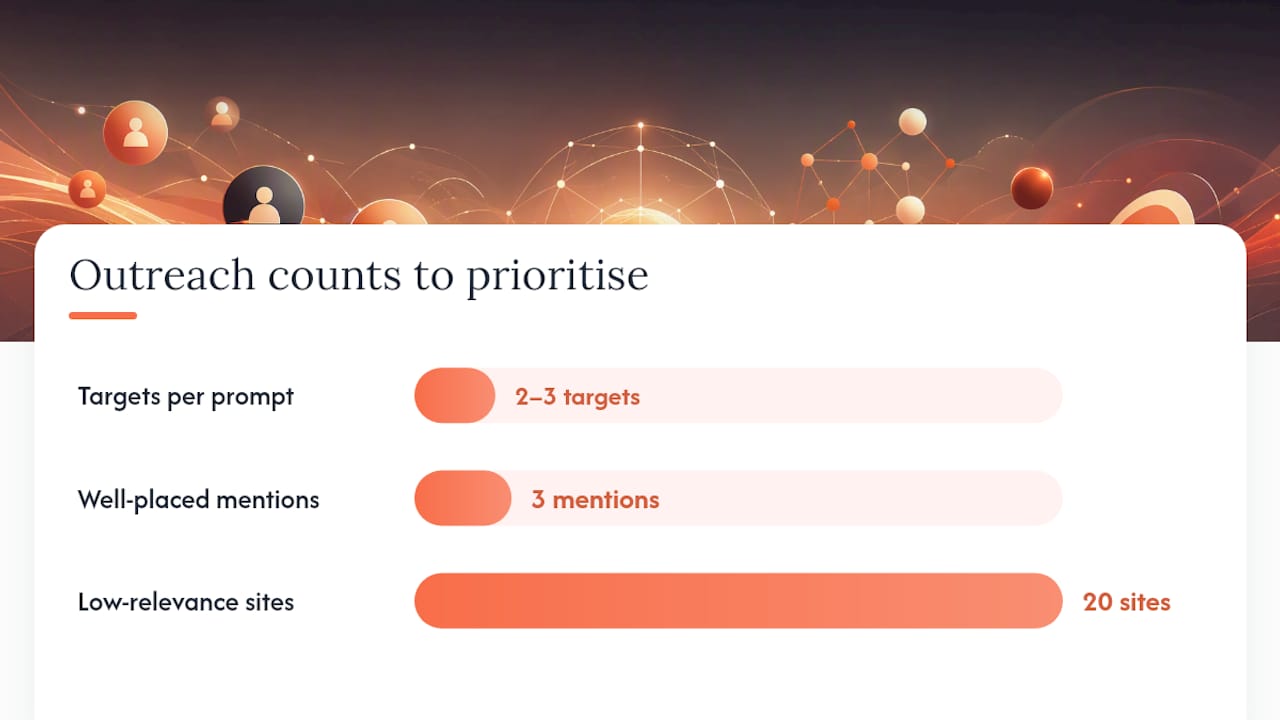
    Earning the Third-Party Mentions That Tip the Model Toward You — overview diagram

    How to Track Whether Your Work Is Actually Moving the Needle

    Run the same 10 to 20 prompts every week, in a fresh logged-out session, and log the same five data points every time: date, prompt, mention (yes or no), competitor order, and cited URL. Consistency in the prompt list matters more than the exact number you choose. Swapping prompts week to week makes trends impossible to read.

    From that log, two formulas do the real work:

    • Mention rate = number of prompts where you appeared ÷ total prompts run that week.
    • Share of voice = your mentions ÷ total brand mentions across all competitors on the same prompt set.

    Expect noise before you see signal. A single week’s data can swing based on which model version answered, whether browsing mode was active, or regional variation in results. Give it at least four to six weeks of consistent sampling before drawing conclusions about whether a specific tactic, like a new backlink or a rewritten page, actually changed anything.

    Manual tracking in a spreadsheet works fine at small scale, but it gets tedious past a handful of prompts or competitors. When you’re running more than 20 to 30 prompts, watching several competitors, or need historical trend charts instead of a static log, that’s the point to consider a dedicated ChatGPT rank tracker built for exactly this kind of sampling. Look for tools that report cited URLs specifically, not just whether your brand name appeared somewhere in the text.

    How Long Before You See Results?

    Technical fixes move fast. Fixing a blocked robots.txt directive or an IP allowlist issue can restore eligibility within days once changes propagate. Content and citation work moves slower, often taking several weeks to a few months before you see a measurable shift in mention rate, because it depends on external sites publishing, indexing, and the model incorporating that corroboration into its answers.

    Expect variability along the way. Model version updates, whether browsing mode is active, session memory, and even regional differences all introduce noise that has nothing to do with your work.

    A realistic 90-day sequence: weeks one and two, fix crawler access and rewrite your highest-priority page to answer-first. Weeks three through six, launch outreach to two or three target publications. Weeks seven through twelve, expand structured data across key pages and start weekly tracking in earnest, watching for the first citation shifts to appear.
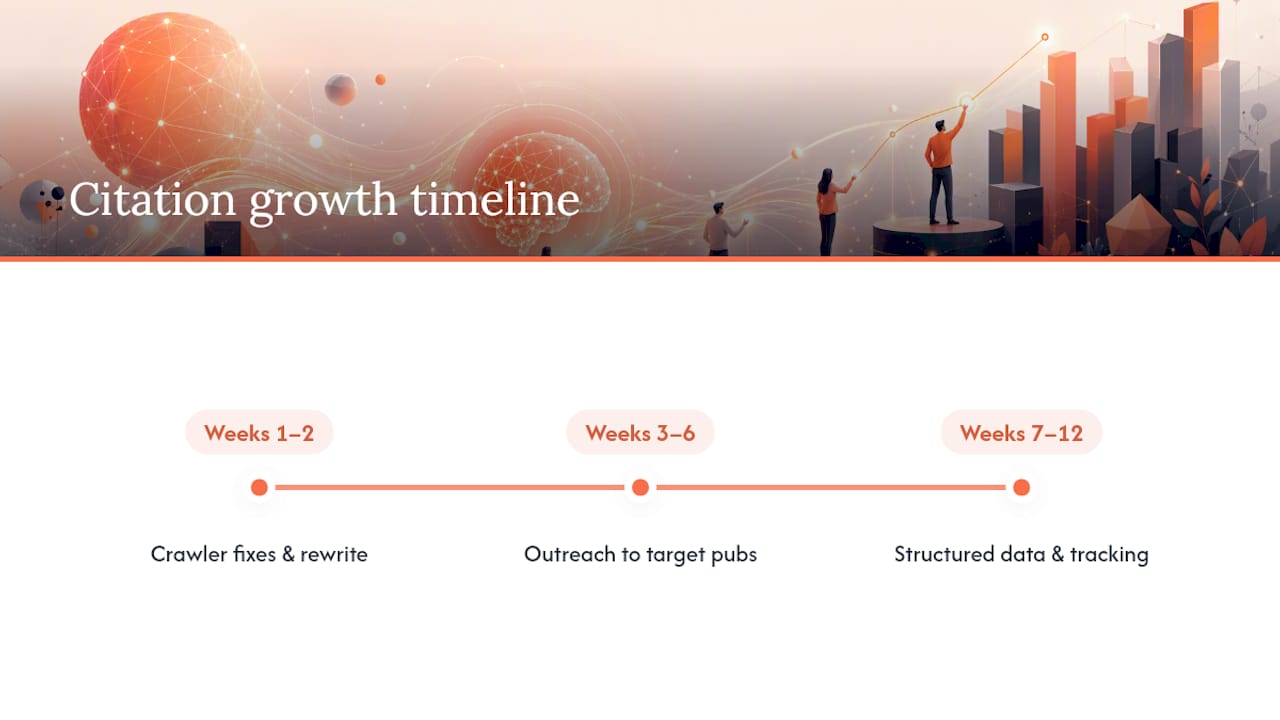
    Three-stage 90-day visibility roadmap

    What Real Visibility Gains Look Like

    The numbers behind this playbook aren’t theoretical. Brands running structured AI visibility programs have reported significant increases in visibility and over a million dollars in attributed revenue after prioritizing crawler access, answer-first rewrites, and citation outreach in sequence.

    One case worth studying: a brand called Lido went from zero visibility to appearing in a notable share of tracked ChatGPT prompts after applying this exact sequence, tracked using the same mention rate and share of voice framework covered above. The full case study walks through which prompts moved and which citations drove the shift.

    The tools that map most directly to this playbook:

    • A visibility tracker for the weekly prompt sampling described earlier, without building your own spreadsheet from scratch.
    • Prompt research to identify which buyer questions you’re currently missing entirely, not just the ones you already rank for.
    • A citation outreach system to manage the listicle and PR pitching campaign at scale, rather than one email at a time.

    Where Marketers Waste Time Chasing ChatGPT Visibility

    Most teams get this backward. They spend weeks perfecting answer-first copy on a page that OAI-SearchBot can’t even reach because a CDN rule blocked it eight months ago and nobody checked. Fix crawler access first. Rewrite one page to be genuinely extractable second. Everything else is downstream of those two moves.

    Watch for these red flags: drawing conclusions from a single week of prompt data, treating any AI crawler as hostile traffic to block by default, and ignoring third-party citations because they feel harder to control than your own site. They’re harder, and they matter more.

    Thirty-day checklist: verify OAI-SearchBot access, rewrite your top page, pick your prompt list, and pitch two publications.

    — Jim

    Let CrowdReply Handle the Tracking While You Handle the Strategy

    Crowdreply is the alternative to guessing at your ChatGPT visibility with manual spreadsheet checks. Instead of running prompts by hand every week, you get daily scans across ChatGPT, Gemini, Perplexity, Google AI, and Copilot, with mention rate, share of voice, and cited URLs tracked automatically.
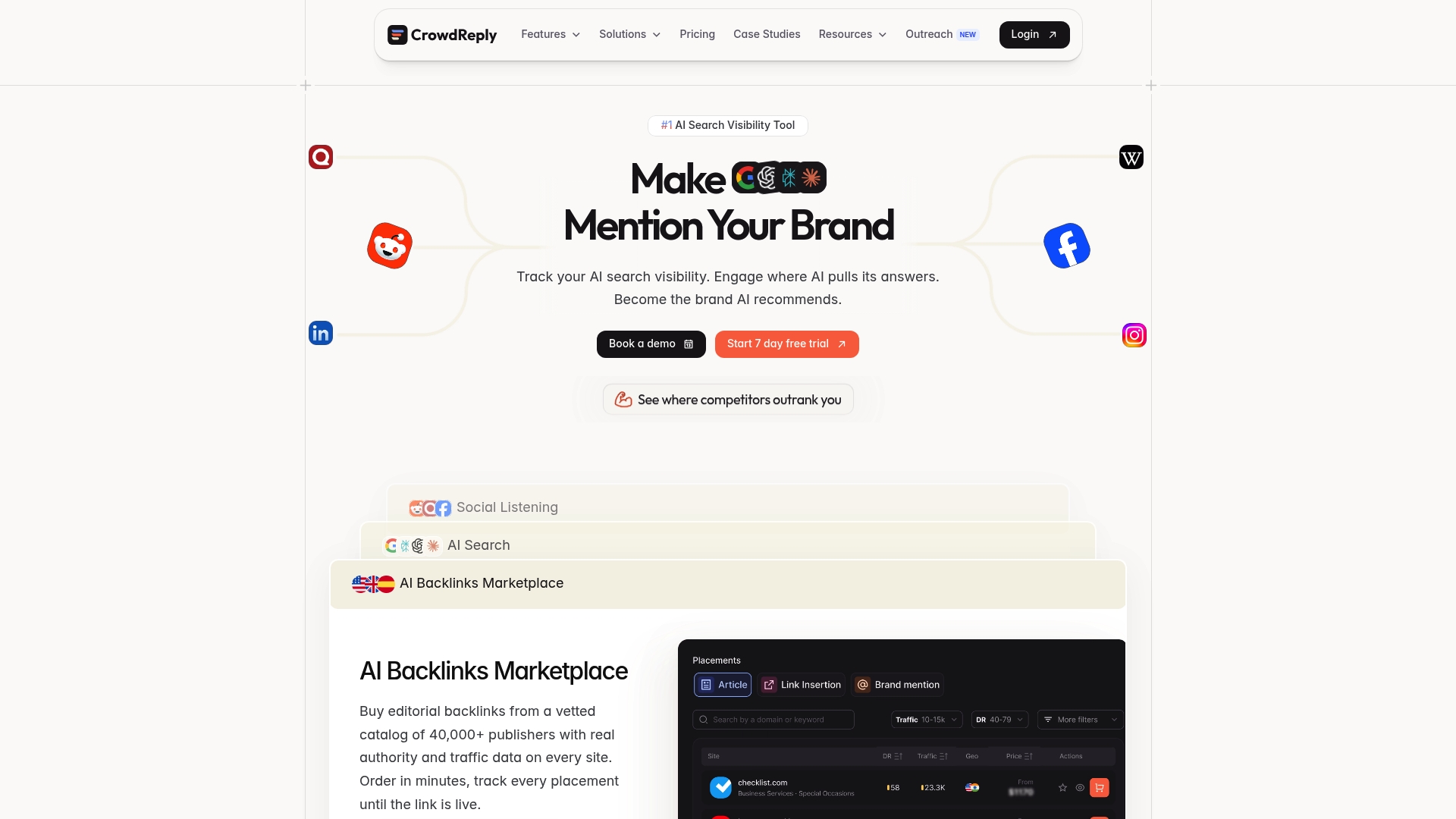
    Crowdreply

    The platform maps directly onto the playbook covered here. Prompt research surfaces the buyer questions you’re currently missing. The visibility tracker replaces the manual weekly log with continuous scans. And when you’re ready to earn the third-party citations that tip a model toward naming you, the AI Backlinks Marketplace connects you with vetted sources instead of cold-pitching editors one at a time.

    Start with a free visibility audit to see where your brand currently stands across AI search engines, then check the pricing page for current plan details and pricing.

    Sources

    Confirm crawler behavior directly against OpenAI’s own documentation rather than secondhand summaries. The overview of OpenAI crawlers lists user agents and published IP ranges for OAI-SearchBot, GPTBot, and ChatGPT-User. The ChatGPT Search Help Center article explains inclusion requirements directly from OpenAI. For deeper tactical reading, the AEO Labs playbook and Seofable’s guide cover format-specific tactics in more detail.

    FAQ

    How Do I Rank in ChatGPT?

    Focus on three things at once: make sure OAI-SearchBot can crawl your site, rewrite your key pages to answer questions in the first sentence, and earn mentions on third-party sites that already rank for your target prompts. OpenAI confirms there’s no way to guarantee placement, so the goal is raising your mention rate across a fixed prompt set, not chasing a single fixed position.

    Which AI Is Ranked the Highest?

    There’s no single ranking of AI models, since each one (ChatGPT, Gemini, Perplexity, Copilot) pulls from different sources and weighs citations differently. Tracking your visibility across all of them individually, using tools like a competitor analysis tracker, gives a clearer picture than assuming one platform’s results predict another’s.

    What AI Is Better Than ChatGPT?

    No AI model is universally “better” for search visibility purposes. Perplexity leans heavily on real-time web citations, Gemini draws from Google’s index, and ChatGPT Search depends on OAI-SearchBot access, so a brand invisible in one can be well cited in another depending on which technical and content gaps it has closed.

    How Fast Can You Rank on ChatGPT?

    Technical fixes like unblocking OAI-SearchBot can restore eligibility within days once your robots.txt update propagates, which OpenAI says takes about 24 hours. Citation-driven visibility gains, the kind that come from third-party mentions and answer-first rewrites, typically take several weeks to a few months to show up in your mention rate.

    What Does CrowdReply Cost?

    CrowdReply’s Starter plan runs $79 a month, Growth is $239 a month, and Enterprise starts from $399 a month, all listed on the pricing page. One-off editorial mentions through the backlinks marketplace range from $7 to $25 depending on whether you’re purchasing a comment, a comment with a link, or a full post.

    Written with BabyLoveGrowth technology

  • In 90 Days: Engine Aware AI Reputation Management for Marketers

    In 90 Days: Engine Aware AI Reputation Management for Marketers

    AI reputation management means controlling how ChatGPT, Perplexity, Gemini, and Google AI name, describe, and cite your brand when buyers ask questions in your category. The first move is not a content calendar. It’s a baseline: run 20 to 30 real buyer prompts across those engines this week and record which brands get named and which URLs get cited.


    TL;DR:

    • Most AI citations about brands come from third-party sites, making owned-page SEO insufficient without targeted outreach to high-citation domains.
    • Regular weekly sampling across multiple AI engines is essential to accurately measure and improve a brand’s mention and citation share.
    • Ensuring your website is technically accessible to AI crawlers requires checking robots.txt, page speed, and proper content structuring, as some engines may ignore blocked sites.
    • Fast citation gains can be achieved by creating answer-focused passages with embedded facts, quotes, and list formats, while building a parametric consensus takes longer through consistent third-party coverage.
    • Automating sampling and backlink outreach through tools like CrowdReply helps maintain baseline visibility and scales smaller teams’ efforts effectively.

    Crowdreply
    Track Your AI Search Visibility
    CrowdReply helps marketing teams monitor visibility, track citations, and engage in AI search conversations across leading engines.

    Explore CrowdReply

    Table of Contents

    What Does AI Reputation Management Actually Cover?

    AI reputation management is not the same discipline as classic online reputation management, which chases star ratings and review responses. This is about whether a large language model mentions your brand at all, and whether it links to a page you control or a page someone else wrote about you.

    Three layers matter here: mentions (your brand name appears in the answer), citations (a specific URL gets linked as the source), and owned-page presence (your own site is the thing being cited, versus a third party writing about you). Engines differ enough that a strategy built for one can fail on another, which is why this article treats ChatGPT, Perplexity, Gemini, and Google AI Overviews as separate channels rather than as one blended “AI search” bucket.

    Why Do Third-Party Domains Drive Most AI Citations?

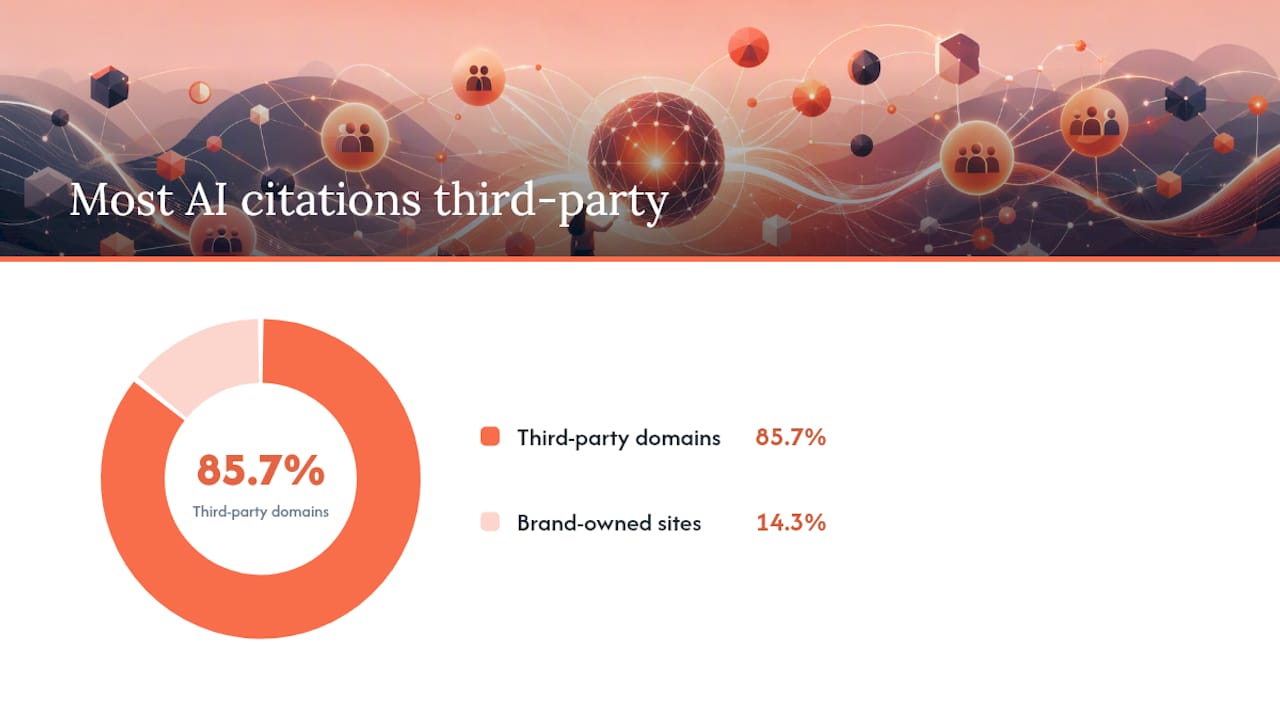
    Roughly 85.7% of the URLs AI assistants cite point to sites the brand doesn’t own, according to research on the sourcing patterns behind AI brand citations. Your own website is rarely the thing an LLM links to when it talks about you. Someone else’s writeup, comparison, or roundup usually is.

    Diagram showing third-party AI citation concentration

    That research also found a Zipf-like concentration where a large majority of citations come from a relatively small portion of domains. A small head of publishers, review sites, and industry hubs supplies most of the citation volume in any given category.

    Nearly all AI citations about a brand come from sources the brand does not control. Owned-page SEO alone cannot fix a citation gap.

    The operational takeaway is straightforward:

    • Identify the handful of domains that already get cited repeatedly in your category
    • Pursue earned placement there instead of spreading outreach thin across dozens of minor sites
    • Favor citation-friendly formats: comparison lists, roundups, and interview transcripts get pulled into answers more often than plain narrative pages
    • Adjust the hunt by engine, since Perplexity tends to pull from discussion-heavy sources like forums and review threads, while ChatGPT leans toward long-form editorial

    Pro Tip: Pull the list of domains already cited for your top three competitors before you pitch anyone. That list is your outreach target list, built for free.

    How Do You Measure Baseline AI Visibility?

    You can’t manage what you haven’t measured, and screenshotting a single ChatGPT answer tells you almost nothing. Citations are probabilistic. The same prompt run twice can return different sources, which is why a one-time check is close to useless and repeated sampling is the only honest way to measure AI visibility.

    Here’s a method you can run this week:

    1. Write 20 to 30 prompts in actual buyer language, the kind of questions a prospect types before they’ve heard of you, not your own marketing copy.
    2. Run each prompt, unchanged, across ChatGPT, Perplexity, Gemini, and Google AI.
    3. Record whether your brand is named, which URLs get cited, and how that varies by engine.
    4. Calculate mention share (how often you’re named versus competitors) and citation share (how often your content, or content about you, is the linked source).
    5. Repeat weekly for the first month to see whether results are stable or noisy.

    Assign this to someone by name, not “marketing.” A ChatGPT visibility tracker or Gemini visibility tracker makes the weekly run fast; a spreadsheet works too, it just costs more hours. Aggregate monthly, review strategy quarterly.

    Is Your Site Even Eligible to Be Cited?

    Before you invest in content or outreach, confirm the engines can actually read your pages. This is the fastest fix available, and most teams skip it.

    • Check robots.txt for OAI-SearchBot, PerplexityBot, GPTBot, and Google-Extended, and confirm none are blocked.
    • Serve your primary content in server-side HTML. If the page body only appears after JavaScript renders, several crawlers never see it.
    • Keep pages fast. Slower first contentful paint correlates with fewer citations in comparative studies of AI search behavior.
    • Structure key facts as short, self-contained passages, not buried three paragraphs deep in a sidebar.
    • Test it directly: request the page through the engine’s fetch or inspection tool, then run a prompt that should surface it and see if it does.

    Pro Tip: Perplexity’s user-triggered fetches sometimes ignore robots.txt entirely, according to testing on optimizing for ChatGPT and Perplexity. Don’t assume a blocked crawler means zero Perplexity visibility. Verify it live instead of trusting the file.

    What Tactics Move Citations Fastest, and What Takes Longer?

    Split your effort into two tracks that run in parallel, not in sequence.

    Fast wins target passage-level retrieval. These can shift citations within weeks:

    1. Write answer-first passages: state the fact or answer in the first sentence, then support it, rather than building up to a conclusion.
    2. Embed a specific statistic or named source in every key passage. Controlled tests show adding quotes and data to a page can lift generative-answer visibility by roughly 40%.
    3. Format claims as lists, tables, and short quotable summaries under 400 tokens. That’s the shape retrieval systems favor when reranking passages.
    4. Pitch the owners of existing roundups, comparison posts, and interview transcripts already cited in your category, rather than waiting for them to find you.

    Slow wins build parametric consensus, the deeper pattern a model learns from repeated exposure to consistent facts about you across many independent sources. That means the same entity description (what you do, who you serve, what makes you different) showing up the same way across your own site, press coverage, and third-party listings, plus a steady drip of earned coverage on the head domains identified earlier.

    Pro Tip: Match tactics to the engine. ChatGPT tends to cite fewer sources but weight each one more heavily, so depth and authority on one strong placement matter more than volume. Perplexity cites broadly, so breadth of coverage across discussion sites pays off faster there. Google AI Overviews largely mirror core Search rankings, so your existing SEO work still counts.

    How Often Should You Check Your AI Visibility?

    Weekly sampling catches signal before it becomes a trend you missed. Monthly aggregation smooths out the noise from any single probabilistic run. Quarterly reviews are where you decide whether the strategy needs to change.

    Track a short KPI set instead of a sprawling dashboard:

    • Mention share across your sampled prompt set, by engine
    • Citation share (how often you’re the linked source versus just named)
    • Engine coverage breadth, since 78.2% of cited URLs in one study appeared on only one of four engines tested
    • Share of your citations coming from head domains versus long-tail sites
    • AI-referred traffic that converts, tracked in analytics as a distinct channel

    Name an owner for this before you start. Someone needs to run the sampling, someone needs to own outreach, and someone needs to connect AI-referred sessions to pipeline, or the whole exercise stays a reporting exercise instead of a growth lever.

    What Do Real Visibility Gains Look Like?

    Reported outcomes from brands running this playbook consistently give a sense of the ceiling. CrowdReply’s case study work documents a 47% visibility increase and more than $1 million in attributed revenue in one instance tied to improved AI search rankings.

    It came from sustained sampling, targeted earned placements on domains already trusted by the engines, and editorial backlinks that reinforced consistent entity framing.

    The operational pattern behind these results repeats:

    • Establish a cross-engine baseline before touching content or outreach
    • Prioritize earned coverage on the small set of domains that already get cited in the category
    • Use editorial backlinks to reinforce consistent brand framing rather than chasing random placements
    • Re-measure on the same cadence to confirm the gain holds across engines, not just one

    Smaller teams shouldn’t expect identical percentages. Budget and existing domain authority both shape the ceiling. But the sequence, baseline first, then targeted earned coverage, then re-measurement, scales down to a single-person marketing team just as it scales up to an enterprise brand.

    What Actually Matters in the First 90 Days?

    Spend quarter one on the boring parts: technical eligibility, a real baseline, and one or two head-domain placements done well. The trap almost every team falls into is optimizing their own site for months while ignoring that 85.7% of citations come from somewhere else entirely. The other trap is treating one engine’s win as proof of a working strategy. It usually isn’t, since most cited sources don’t carry over between engines.

    — Jim

    How CrowdReply Turns This Playbook Into a Weekly Habit

    Running cross-engine sampling by hand every week is the part most teams quietly abandon by month two. That’s the specific gap Crowdreply closes: it automates the sampling, citation tracking, and prompt research this article just walked through, so the baseline stays current without someone manually copy-pasting prompts into four different chat windows.

    Crowdreply

    The platform runs daily scans across ChatGPT, Perplexity, Gemini, Google AI, and Copilot, tracks which domains are citing you (and your competitors), and flags prompt gaps where you’re getting zero mentions in a topic you should own. Case studies like Respeecher’s jump from 47% to 82% visibility and Lido’s climb from 0 to 15% on ChatGPT show the sampling and outreach approach in this article applied at scale, with the head-domain outreach handled through Crowdreply’s AI backlinks marketplace instead of a manual pitch list.

    Plans start at $79 a month on the Starter tier, with Growth and Enterprise tiers adding deeper competitor tracking and engagement tools as your prompt list grows. If you want to see where your brand currently stands before committing to anything, run a visibility check against your own buyer prompts and see what’s already getting cited, and what isn’t.

    Sources

    FAQ

    What Is AI Reputation Management?

    AI reputation management is the practice of tracking and improving how AI assistants like ChatGPT, Perplexity, and Gemini name and cite your brand in response to buyer questions. It’s distinct from traditional online reputation management, which focuses on reviews and star ratings rather than citations inside AI-generated answers.

    How Is This Different From Traditional SEO?

    Traditional SEO targets ranking positions in a search results page you control through your own site. This discipline targets whether an LLM mentions you at all and whether it links to your page or a third party’s, and 85.7% of the time it’s a third party’s.

    How Often Should We Check Our AI Visibility?

    Sample weekly for the first month to establish a stable baseline, then aggregate monthly and review strategy quarterly. Weekly checks matter because citations are probabilistic and can shift between identical prompt runs.

    Which AI Engines Should We Prioritize First?

    Prioritize the engine where your buyers actually ask questions, since most cited sources don’t overlap across engines. ChatGPT rewards fewer, higher-authority sources; Perplexity rewards breadth; Google AI Overviews largely track your existing Search rankings.

    Does CrowdReply Track All the Major AI Engines?

    Crowdreply runs daily scans across ChatGPT, Gemini, Perplexity, Google AI, and Copilot, tracking mentions, citation sources, and share of voice against competitors. Current pricing starts at $79 a month for the Starter plan.

    Made with BabyLoveGrowth to build website authority

  • AI Trust Signals: Marketers’ 30/60/90 Audit to Win AI Citations

    AI Trust Signals: Marketers’ 30/60/90 Audit to Win AI Citations

    AI trust signals are the verifiable markers ChatGPT, Claude, Perplexity, and Gemini use to decide which brands and sources deserve a citation. The single highest priority for marketers is earning third-party corroboration and publishing verifiable provenance, since models weigh independent confirmation far more heavily than anything a brand says about itself. What follows is an audit framework and a 30/60/90 roadmap for closing the gaps.


    TL;DR:

    • Verifiable provenance signals such as methodology disclosure, named authorship, and source citations have the highest impact on AI citation and trustworthiness.
    • Building entity consistency across directories, adding schema markup, and rewriting key pages into extractable passages are the most effective immediate fixes.
    • Outdated or fabricated trust signals, such as fake credentials or fake mentions, can severely damage credibility and may lead to legal or reputational risks.
    • Different AI models prioritize trust signals differently, with ChatGPT favoring familiarity, Claude rewarding primary sources, and Perplexity emphasizing freshness.
    • Ongoing measurement of citation rate, earned mentions, and schema validation is essential to track and improve your AI visibility strategy.

    Crowdreply
    crowdreply.io
    Measure Your AI Search Visibility
    CrowdReply helps brands monitor visibility, track citations, and engage in online conversations across AI-driven search engines.

    Explore CrowdReply

    Table of Contents

    What Are AI Trust Signals, Exactly?

    AI trust signals are the pieces of evidence a language model uses to judge whether a claim, a brand, or a page is worth citing in its answer. They matter because AI-driven answers skip the ten-blue-links format entirely. There’s no ranking position to fight for, only a binary: cited or not cited.

    That reframes the whole game. Traditional SEO leaned on backlinks, domain authority, and keyword density. AI systems care less about link volume and more about whether an entity can be verified across independent sources. A model self-report on provenance signals found that methodology sections, named authorship, and inline citations score highest among the signals models actually weigh when deciding what to cite.

    Most trust signals fall into five categories:

    • Entity identity — is this brand or author clearly and consistently identified across the web?
    • Earned authority — has anyone besides the brand vouched for it?
    • Content extractability — can a model pull a clean, self-contained answer from the page?
    • Technical accessibility — can crawlers and retrieval systems actually parse the content?
    • Freshness — does the content reflect current, verifiable information?

    Backlinks still count, but mostly as one input into earned authority, not the whole game.

    The Five Signal Categories, With Real Examples

    Each category above translates into specific, checkable items. Here’s what they look like in practice.

    Entity identity shows up as consistency: the same business name, address, and description on Wikidata, Google Business Profile, LinkedIn, and your own site, tied together with sameAs markup pointing to each profile.

    Earned authority means press mentions, third-party reviews, and citations from industry publications that didn’t originate with your marketing team. Industry data suggests earned third-party coverage drives most AI citations, often more than any owned content a brand publishes.

    Content extractability is about format. Short, self-contained passages that answer one question directly, FAQ pairs, and inline citations all give a model something clean to lift into its response.

    Technical accessibility covers JSON-LD for Organization and Author, semantic HTML with a single H1, and page speed that doesn’t choke a crawler. Pages carrying Article, FAQPage, and Organization schema are cited noticeably more often than pages without it.

    Freshness means visible last-updated timestamps and edits that actually change the substance of a page, not a cosmetic date bump.

    Pro Tip: Run your own homepage and one flagship article through a schema validator today. Missing Organization markup is the single most common gap teams find in their first audit.

    Which Provenance Signals Move the Needle Most?

    Not all trust signals carry equal weight. Provenance signals, the ones that let a reader or a model trace exactly how a claim was verified, punch far above their weight class because almost nobody bothers to publish them.

    Four signals matter most, in roughly this order:

    1. Methodology disclosure. A short “how we know this” section acts as a show-your-work moment. It tells a model the claim wasn’t asserted out of thin air.
    2. Named authorship with credentials. A real name attached to real expertise gives a model something to verify against other sources.
    3. Inline and source citations. Every factual claim linked to its origin builds what researchers call a verification chain, and models consistently prefer content that supplies one.
    4. Publication and last-updated timestamps. Dated content reduces the uncertainty a retrieval system has to resolve on its own.

    The same self-report study that ranked these signals scored methodology sections at 8.5 out of 10 for citation impact, with named authorship and inline citations close behind at 7.5 each, according to the SIGI research on authority and provenance signals. Separate research on veracity classification found that credibility signals like these map strongly to actual accuracy across a majority of the datasets tested. Methodology disclosure is rare in marketing content today, which is exactly why it works: almost no competitor is doing it.

    What Should You Fix First?

    Not every fix deserves the same urgency. Some take an afternoon; others take a quarter. Sort by impact divided by effort, and start with whatever scores highest.

    1. Fix entity consistency across directories. Mismatched names, addresses, or descriptions between your site, Google Business Profile, and LinkedIn confuse both crawlers and models. This is usually a same-day fix.
    2. Add Organization and Author schema. JSON-LD markup gives models a machine-readable identity to anchor to, using the vocabulary Schema.
    3. Rewrite key pages into extractable passages. Break dense paragraphs into direct, self-contained answers and add FAQ schema where it fits.
    4. Pursue earned mentions through PR and outreach. This takes longer, but third-party coverage remains the highest-leverage category long-term.
    5. Publish methodology and author-credential pages. These are underused, which makes them a real differentiator once live.

    Pro Tip: Treat weeks 1 through 30 as the cleanup sprint (entity consistency, schema, extractable copy), days 31 through 60 as the outreach sprint (press, reviews, citations), and days 61 through 90 as the measurement sprint (tracking citation rate and iterating).

    Do ChatGPT, Claude, Perplexity, and Gemini Weigh Signals the Same Way?

    They don’t, and treating them identically wastes effort. Each engine leans on a different mix of training data and live retrieval, so the same trust signal doesn’t carry equal weight everywhere.

    • ChatGPT leans on training-data familiarity, so consistent entity coverage built up over time and historical authority matter more than a page published last week.
    • Claude tends to favor depth and primary sources, rewarding content that cites original research over content that summarizes someone else’s summary.
    • Perplexity pulls from live search results, so freshness and community signals like recent reviews or forum mentions carry outsized weight.
    • Gemini and Google AI Mode align closely with traditional E-E-A-T signals, meaning your existing SEO fundamentals still matter here more than on the others.

    If you only have bandwidth for one engine-specific move, prioritize primary-source depth for Claude and freshness for Perplexity. Both are cheaper to fix than rebuilding years of training-data familiarity.

    How Do You Track Progress on AI Trust Signals?

    You can’t manage what you don’t measure, and AI visibility has its own metric set distinct from classic SEO dashboards.

    • AI citation rate tracks how often your brand or content gets cited across a defined set of prompts.
    • Earned mention volume counts independent, third-party references to your brand appearing anywhere online.
    • Schema validation pass rate measures the share of your key pages carrying clean, error-free structured data.
    • Share of voice compares your citation frequency against named competitors across the same prompt set.

    A sound monitoring workflow runs daily scans across multiple models, flags new mentions as they appear, and tracks the verification chain back to source.

    What Happens When Trust Signals Are Faked?

    Fabricating trust signals is tempting because some of them look easy to game. It backfires faster than most marketers expect.

    Fake credentials are the most common failure. A brand invents a named “expert” or attaches credentials nobody can verify. Models cross-reference entities against multiple sources, and an author who doesn’t exist anywhere else on the web (no LinkedIn, no other bylines, no citation trail) reads as a red flag rather than a trust boost. The same logic applies to fabricated review counts or purchased testimonials that don’t match any public review platform.

    Manufactured “earned” mentions carry similar risk. Paying for low-quality guest posts stuffed with brand mentions, or seeding fake forum discussions, might briefly inflate mention volume. But these sources tend to cluster in obviously low-authority domains, and once a model or a human fact-checker notices the pattern, it damages every other signal from that domain going forward.

    Illustration of sources passing verification

    Fake methodology sections are perhaps the riskiest move of all, precisely because methodology carries so much weight. Writing a “how we tested this” section for a test that never happened isn’t just a trust-signal failure. It’s a factual misrepresentation that can expose a brand to real legal and reputational consequences if discovered.

    The safer path is slower but durable: build entity consistency honestly, earn coverage through actual PR work, and only publish methodology you can defend if someone asks for the underlying data. Trust signals compound over time. Fake ones collapse the moment anyone checks.

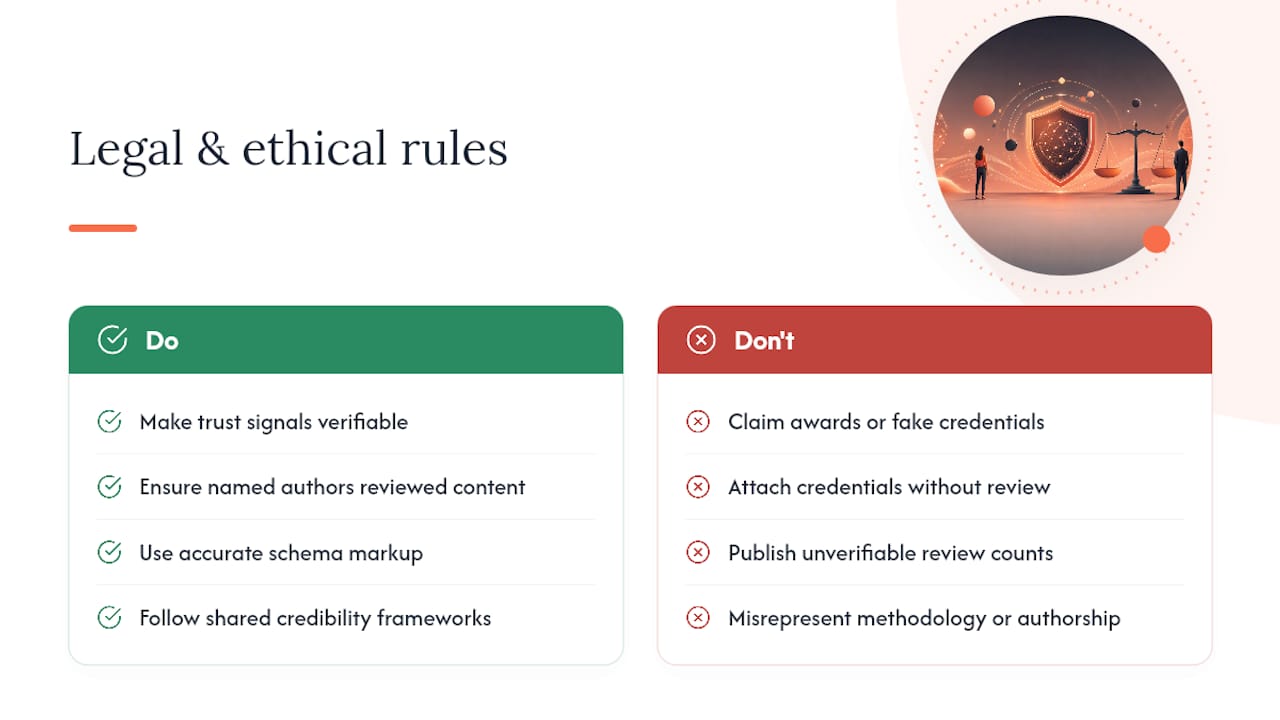
    Publishing trust signals sits closer to consumer protection law than most marketers assume. Claims implying independent verification, awards, or credentials that don’t exist can trigger the same false-advertising scrutiny that applies to any other marketing claim, regardless of whether an AI model or a human reads it first.

    Named authorship raises its own question: if you attach a real person’s name and credentials to content, that person should have genuinely reviewed or contributed to it. Attaching a credentialed name to content they never touched is a misrepresentation of expertise, not a growth hack.

    Schema markup carries a quieter risk too. Structured data that claims review counts, ratings, or organizational details inconsistent with what’s publicly verifiable can mislead both users and the platforms parsing that data, and search engines have historically penalized exactly this kind of markup abuse.

    The ethical baseline is simple: every trust signal you publish should be reconstructable by an outside party. If a journalist, a regulator, or a curious customer tried to verify your methodology section, your author credentials, or your review counts, they should land on evidence that holds up. Frameworks like the W3C’s credibility signals taxonomy exist precisely because credibility infrastructure needs shared, checkable definitions rather than brand-by-brand self-assessment. Treat that as the standard to build toward, not a compliance hurdle to route around.

    What Legal and Ethical Lines Apply Here? — overview diagram

    Perspective: Winning AI Citations Takes a Cross-Functional Team

    Machine relations can’t sit inside one department. PR earns the mentions, content builds the extractable pages, and analytics tracks whether any of it moved citation rate. Report three numbers to leadership monthly: citation rate, earned mention volume, and schema pass rate. Anything less leaves the effort unaccountable.

    — Jim

    Close the Gaps Crowdreply Finds in Your AI Visibility

    Auditing entity consistency, schema, and earned mentions by hand across four different AI engines is a lot to track manually, and gaps close faster when you can see them in one place. A suitable AI search visibility platform runs daily scans across multiple AI engines, tracking exactly which citations you’re winning, which competitors are taking instead, and where your share of voice stands against them.

    Crowdreply

    The platform’s prompt research tools surface the exact queries where your brand is missing, mapping directly onto the audit priorities covered above. When the gap is earned authority specifically, the AI Backlinks Marketplace connects you to vetted sources for citation outreach instead of leaving PR as a guessing game. Crowdreply’s own positioning is built around this gap: most tools track visibility, but few let you act on it by engaging directly with the sources AI already cites.

    If you want a baseline before committing to anything, run the free AI visibility check first. From there, plans start at $79 a month on the Starter tier, scaling up to Growth and Enterprise as your citation-tracking needs grow.

    Sources

    FAQ

    What Is the 30% Rule for AI?

    There’s no single, universally recognized “30% rule” governing AI trust signals or AI-generated content thresholds. If you’ve seen the term applied to content mixes or disclosure requirements, treat it as an informal guideline rather than an established standard, since no authoritative body defines it this way.

    Can AI Give Trading Signals?

    AI models can generate market commentary and pattern-based observations, but trust-signal principles still apply: verify the provenance behind any claim before acting on it. Financial content carries higher stakes than most categories, so named authorship, methodology disclosure, and sourced data matter even more here than in general marketing content.

    What Is the AI Trust Paradox?

    The AI trust paradox refers to the tension between how confidently AI systems present answers and how verifiable those answers actually are. Marketers can reduce that gap on their own content by publishing verifiable provenance, methodology, and named authorship, the same signals research identifies as top-ranked for citation decisions.

    Is Signal AI Legit?

    This article covers AI trust signals as a category, meaning the credibility markers models use to decide what to cite, rather than any single named product called “Signal AI.” For monitoring and closing gaps in your own AI visibility, platforms like Crowdreply track citation rate and earned mentions across ChatGPT, Gemini, and Perplexity in one dashboard.

    How Much Does Crowdreply Cost?

    Crowdreply’s Starter plan runs $79 per month, Growth is $239 per month, and Enterprise starts from $399 per month, with a free visibility check available before you commit to any tier.

    Written with BabyLoveGrowth AI